The Development History of Touchscreen All-in-One PCs: A Technological Revolution from Emergence to Widespread Popularity
In today's digital age, touch-screen all-in-one machines have been widely used in various fields, becoming an indispensable part of people's lives and work. From interactive teaching in education to information display and self-service in commercial venues, and convenient operation in the medical industry, touch-screen all-in-one machines have greatly improved the efficiency of information transmission and operation with their intuitive and convenient interaction methods. However, are you curious about how it has gradually evolved from its initial concept into the ubiquitous smart device it is today? Let's take a look back at the development history of touch-screen all-in-one machines.
Early Exploration Stage: The Beginning of Technological Prototypes
The origins of touchscreen all-in-one computers can be traced back to the 1960s. At that time, the US military began researching touch interaction technology for military purposes. In 1965, E.A. Johnson of the Royal Radar Research Institute in the UK developed what is considered to be the world's first touchscreen.

The screen used touch technology similar to that of today's tablets, but at the time it could only recognize single-point touches. This technology was used in British air traffic control until around 1995, and can be considered a precursor to modern ATMs, ticket machines, and outdoor information kiosk screens.
In 1972, the University of Illinois introduced the Plato IV touchscreen terminal as part of the Plato educational computer system, which the university had been developing since the 1960s. It was equipped with an infrared touch panel, allowing students to answer questions by touching the screen.

Although other touchscreen devices existed before Plato IV, it was the first to be widely known and used in Illinois classrooms. These early attempts laid an important foundation for the development of touchscreen all-in-one machines, demonstrating the enormous potential of touch interaction in the field of information exchange, even though the technology was still immature.
Early stage of development: Application areas gradually expanded
By the 1980s, touchscreen all-in-one computers began to emerge from the laboratory and enter the initial application stage. Initially, they were mainly used in industrial control and military fields. Due to their ability to achieve more convenient operation and control, they gradually attracted the attention of related industries. For example, on industrial production lines, workers can use touchscreens to set parameters and operate equipment, which greatly improves the accuracy and efficiency of operation compared to traditional button operation.

In the late 1990s, with continuous technological advancements and gradual cost reductions, touchscreen kiosks began to penetrate the commercial sector. The retail industry was among the first to adopt this technology for product information retrieval and self-checkout systems. In some large supermarkets, customers could easily check product prices, inventory, and promotional information using touchscreen kiosks, and complete the checkout process independently, saving time spent waiting in line and enhancing the shopping experience.

The catering industry has also begun using touch-screen kiosks as ordering devices. Waiters or customers can directly select dishes and add notes on the screen, and order information is transmitted to the kitchen in real time, improving ordering efficiency and accuracy and reducing errors that may occur with traditional paper-based ordering. Meanwhile, touch-screen kiosks are also beginning to emerge in the education sector, with some schools experimenting with their use in multimedia teaching, enriching teaching methods and enhancing classroom interactivity.
Rapid Growth Period: Technological Innovation and Market Expansion
In the early 21st century, with the rapid popularization of smartphones and tablets, touch technology experienced explosive growth, providing a powerful impetus for the rise of all-in-one touchscreen PCs. At this time, all-in-one touchscreen PCs achieved significant technological breakthroughs. Projected capacitive touch technology, with its advantages of high precision, low power consumption, and fast response, gradually became the mainstream in the market. This technology not only improved the sensitivity and accuracy of touch but also supported multi-touch, allowing users to zoom, rotate, and perform other operations on the screen using multiple fingers, greatly enriching the interaction methods and enhancing the user experience

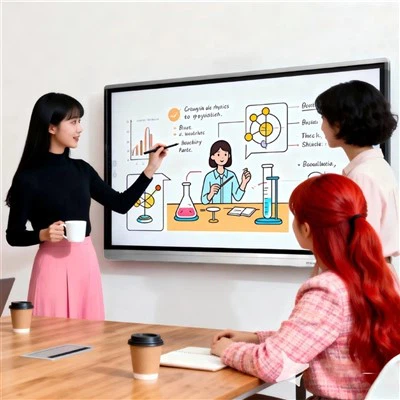
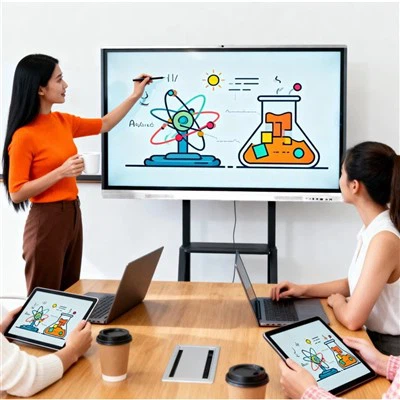
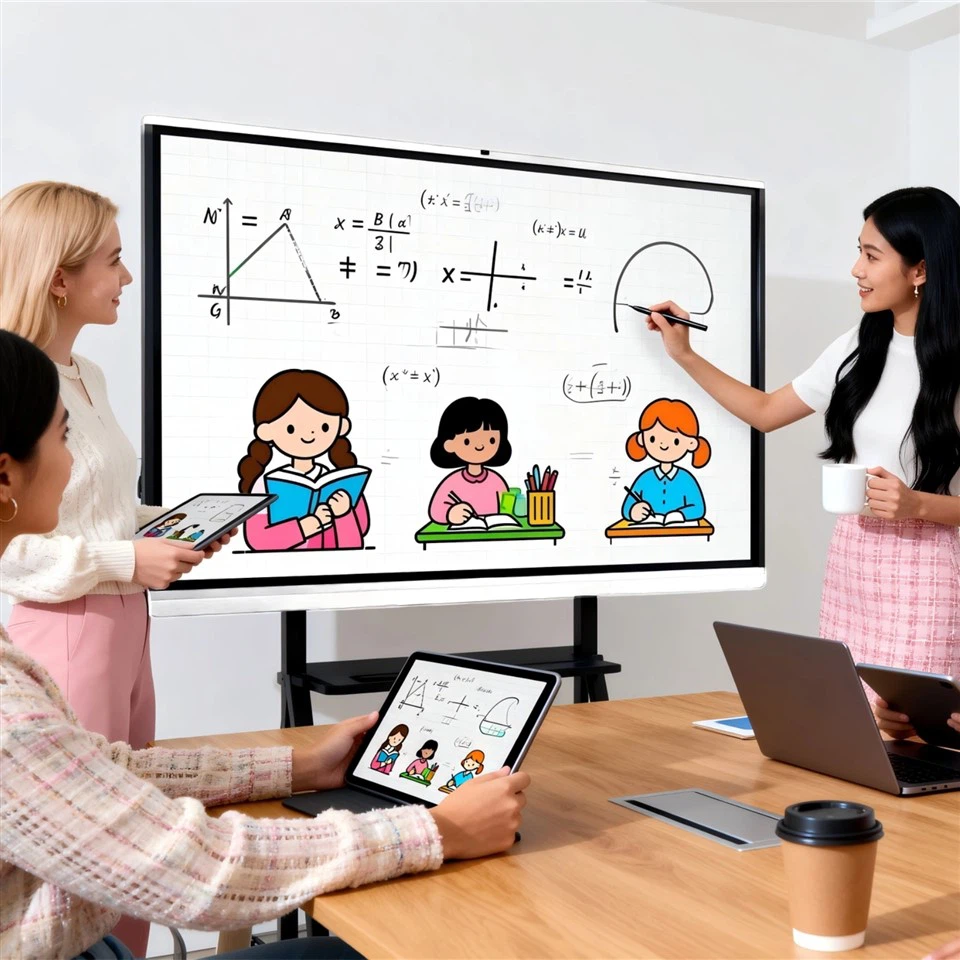
Infrared touch technology, as a non-contact touch technology, also saw widespread application during this period. It features strong anti-interference capabilities and a long lifespan, making it particularly suitable for large screens and scenarios with high environmental adaptability requirements, such as outdoor advertising displays and industrial control. During this stage, the application areas of touch-screen all-in-one machines expanded significantly. In the education sector, it became a core device in smart classrooms. Teachers can use touch-screen all-in-one machines to display rich teaching resources, such as videos, animations, and 3D models, and can also utilize interactive teaching software to conduct classroom questions, group discussions, and assignment submissions, fully mobilizing students' learning enthusiasm and improving teaching effectiveness.

Statistics show that classrooms using touch-screen all-in-one machines have significantly increased classroom interaction rates, with students who used to passively receive knowledge now exploring the mysteries of knowledge with their fingertips.
In the transportation sector, touch-screen kiosks provide passengers with convenient transportation information inquiry services. At transportation hubs such as airports and train stations, passengers can use touch-screen kiosks to check flight and train information, purchase tickets, and view transfer routes.
Meanwhile, it is also used in traffic monitoring and dispatching systems, allowing staff to monitor traffic flow in real time, conduct traffic command and dispatch through touch operation, thus improving the level of intelligence in traffic management.
Mature and Stable Stage: Product Diversification and Market Segmentation
In recent years, the touch screen all-in-one PC market has gradually matured and stabilized. With intensifying industry competition and continuous technological innovation, the performance and quality of touch screen all-in-one PC products have significantly improved. To meet the diverse needs of different fields, the product line of touch screen all-in-one PCs has become increasingly rich, showing a diversified development trend. In terms of size, it covers everything from small desktop all-in-one PCs of a dozen inches to large commercial displays of hundreds of inches; in terms of functionality, in addition to basic touch interaction functions, it also integrates a variety of advanced technologies such as intelligent voice recognition, facial recognition, and IoT connectivity.

In terms of product functionality, touch-screen all-in-one machines have been deeply customized to meet the characteristics and needs of different industries. In the education sector, the products place greater emphasis on the writing experience and the integration of teaching resources. Some touch-screen all-in-one machines are equipped with professional writing software that simulates realistic pen strokes and effects, supports simultaneous writing by multiple users, and facilitates interactive communication between teachers and students in the classroom. Simultaneously, they integrate a rich teaching resource platform, allowing teachers to easily access various teaching materials, videos, test questions, and other resources to achieve diversified presentation of teaching content.In the medical field, touchscreen all-in-one machines emphasize the use of antibacterial materials, high-brightness displays, and stability. Using antibacterial materials for the screen and casing effectively prevents bacterial growth, ensuring a hygienic and safe medical environment. High-brightness displays clearly present images and text information in complex medical environments, facilitating doctor viewing. Stable and reliable performance ensures that the device will not malfunction during prolonged use, guaranteeing the smooth operation of medical procedures.

In the retail and transportation sectors, products place greater emphasis on durability, responsiveness, and remote management capabilities. Touchscreen kiosks in retail locations need to withstand frequent touch operations, thus requiring more robust and durable materials and structural designs. Fast response times provide customers with a smooth and convenient experience, enhancing the shopping experience. Remote management capabilities allow merchants to centrally manage and maintain touchscreen kiosks distributed across different stores via a network, enabling timely updates to product information and promotional push notifications.
 From a regional market perspective, East and South China, with their developed economies, well-developed IT infrastructure, and strong desire for digital transformation among enterprises, have become the main consumer areas for touch screen all-in-one machines, collectively accounting for over 55% of the national market share. Market demand in the central and western regions is also growing rapidly, demonstrating enormous development potential.

With the acceleration of digital transformation across industries, the application scenarios of touch screen all-in-one machines will be further expanded, and product functions will continue to be upgraded, bringing more convenience and innovative experiences to people's lives and work.